Nash Electric LLC systems are the backbone of any commercial building. From lighting and HVAC equipment to data servers, production machinery, and security systems, nearly every operation depends on reliable power. When electrical infrastructure is neglected, the consequences extend far beyond inconvenience. Unexpected downtime, equipment damage, fire hazards, compliance violations, and financial losses can quickly follow. For property managers, facility directors, and business owners, understanding essential electrical maintenance tips for commercial buildings is not just about compliance—it is about protecting assets, ensuring employee safety, and maintaining operational continuity.
Commercial electrical systems are inherently more complex than residential systems. They operate at higher voltages, serve larger loads, and often integrate advanced automation and monitoring technologies. This complexity means that proactive maintenance is critical. Waiting until something fails is not a sustainable strategy. Instead, a structured, preventive approach to electrical maintenance ensures safety, improves energy efficiency, and extends the lifespan of costly infrastructure.
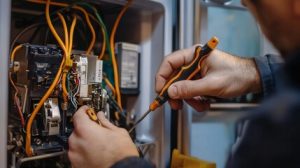
One of the most important aspects of commercial electrical maintenance is conducting routine inspections. Electrical panels, switchgear, transformers, and distribution boards should be inspected regularly for signs of overheating, corrosion, loose connections, and wear. Even minor issues, such as a slightly loose terminal, can escalate into serious problems if left unaddressed. During inspections, professionals typically use thermal imaging to detect hot spots that are invisible to the naked eye. These temperature anomalies often indicate overloaded circuits or failing components, allowing for corrective action before a breakdown occurs. Routine inspections also verify that protective devices such as circuit breakers and fuses are functioning properly and calibrated to the building’s load requirements.
Load management is another critical area of focus. Commercial buildings frequently expand operations, add new equipment, or reconfigure spaces, all of which increase electrical demand. Without proper assessment, circuits may become overloaded, leading to frequent breaker trips or, worse, overheating and fire hazards. Facility managers should periodically evaluate electrical loads and ensure that distribution panels and feeders are appropriately rated. Load balancing across phases in three-phase systems is particularly important to prevent uneven stress on equipment. When necessary, upgrading panels or redistributing circuits can significantly improve reliability and safety.
Preventive maintenance should also include regular testing of emergency systems. Backup generators, emergency lighting, and uninterruptible power supplies (UPS) are essential in commercial settings where even brief outages can disrupt operations or endanger occupants. Testing these systems under load conditions ensures they will perform as expected during a real emergency. Batteries in emergency lighting units and UPS systems degrade over time, so scheduled replacement is necessary to maintain reliability. Neglecting these systems can create serious liability risks if they fail during a power outage.
Another essential maintenance tip for commercial buildings involves keeping electrical equipment clean and free of environmental contaminants. Dust, moisture, and debris can accumulate in electrical rooms and panels, increasing the risk of short circuits and overheating. Moisture intrusion is particularly dangerous, as it can lead to corrosion and insulation breakdown. Electrical rooms should remain dry, well-ventilated, and restricted to authorized personnel. Implementing a housekeeping schedule that includes cleaning around panels and ensuring adequate clearance in front of equipment is not only good practice but also necessary for code compliance and safe access during maintenance.
Proper documentation and record-keeping are often overlooked but play a crucial role in effective electrical maintenance. Maintaining updated single-line diagrams, panel schedules, and maintenance logs allows technicians to quickly identify circuits, trace faults, and plan upgrades. Documentation should include inspection reports, testing results, equipment specifications, and records of repairs or modifications. When electrical systems are well-documented, troubleshooting becomes faster and more accurate, minimizing downtime and reducing labor costs.
Commercial lighting systems also require consistent maintenance. Burned-out lamps, flickering fixtures, and inconsistent illumination not only affect energy efficiency but also workplace productivity and safety. Routine replacement of aging lamps and ballasts, cleaning of fixtures, and upgrades to energy-efficient lighting systems can significantly reduce operating expenses. Modern lighting technologies offer improved lifespan and lower energy consumption, making proactive replacement a cost-effective strategy. In warehouses, office spaces, and retail environments, well-maintained lighting enhances visibility, reduces eye strain, and supports overall employee performance.
Another key maintenance area involves inspecting and tightening electrical connections. Over time, vibration from machinery, temperature fluctuations, and normal wear can loosen connections in panels, switchgear, and equipment terminals. Loose connections create resistance, which generates heat and increases the likelihood of arcing. Periodic torque checks using calibrated tools ensure that connections meet manufacturer specifications. Addressing loose connections proactively reduces the risk of equipment damage and electrical fires, making this a fundamental part of any commercial electrical maintenance program.
Commercial buildings should also prioritize surge protection and power quality monitoring. Sensitive equipment such as servers, control systems, and medical devices can be damaged by voltage spikes, harmonic distortion, or power fluctuations. Installing and maintaining surge protective devices at service entrances and distribution panels helps safeguard critical assets. Additionally, power quality analysis can identify issues such as voltage sags, transients, or harmonic distortion caused by non-linear loads. Addressing these issues improves system stability and prevents premature equipment failure.
A comprehensive electrical maintenance program typically includes the following core components:
- Scheduled inspections of panels, switchgear, and distribution systems.
- Load analysis and balancing to prevent circuit overloads.
- Testing and maintenance of emergency power systems.
- Cleaning and environmental control of electrical rooms.
- Documentation updates and detailed maintenance records.
- Connection tightening and thermal scanning for hot spots.
- Surge protection inspection and power quality monitoring.
In addition to preventive maintenance, commercial properties should implement a structured testing schedule for protective devices. Circuit breakers, ground fault protection systems, and relays must operate within specified parameters to provide effective protection. Periodic trip testing verifies that breakers will interrupt fault currents as designed. Over time, mechanical components inside breakers can degrade, and without testing, a breaker may fail to trip during a fault condition. Testing ensures that protective coordination is maintained, reducing the risk of cascading failures.
Grounding and bonding systems also demand regular evaluation. Proper grounding provides a safe path for fault currents and protects personnel from electric shock. Bonding ensures that metal enclosures and conductive components remain at the same electrical potential. In commercial buildings, where multiple systems and metallic structures are interconnected, grounding integrity is critical. Inspections should confirm that grounding conductors are intact, securely connected, and free from corrosion. Any deficiencies should be corrected immediately to maintain compliance and safety.
Training and awareness are equally important in maintaining electrical safety in commercial environments. Employees should understand basic electrical safety practices, such as avoiding unauthorized access to electrical panels and reporting unusual smells, sounds, or flickering lights. Clear labeling of panels and circuits enhances safety and facilitates faster response during emergencies. Lockout/tagout procedures should be strictly enforced during maintenance to prevent accidental energization of equipment.
Energy efficiency is another compelling reason to prioritize electrical maintenance. Inefficient systems consume more power and increase operating costs. Aging motors, outdated lighting systems, and poorly maintained HVAC equipment draw excessive current and strain electrical infrastructure. Regular audits can identify opportunities for upgrades that improve performance and reduce energy waste. Even simple measures, such as recalibrating controls or replacing inefficient components, can yield measurable savings over time.
To ensure long-term success, facility managers should adopt a preventive maintenance strategy rather than a reactive one. A reactive approach often leads to emergency repairs, higher labor costs, and unplanned downtime. In contrast, preventive maintenance spreads costs more predictably and reduces the likelihood of catastrophic failures. Many commercial properties benefit from establishing annual or semi-annual service contracts that outline inspection intervals, testing procedures, and documentation requirements. This structured framework ensures accountability and consistency.
Ultimately, electrical maintenance in commercial buildings is about risk management. Electrical failures can lead to fires, equipment damage, regulatory penalties, and liability claims. By implementing structured maintenance practices, property owners reduce exposure to these risks while enhancing operational reliability. Electrical infrastructure represents a significant investment, and protecting that investment requires diligence, planning, and professional oversight.
In conclusion, essential electrical maintenance tips for commercial buildings revolve around proactive inspection, load management, testing of emergency systems, environmental control, documentation, connection integrity, and power quality monitoring. When these elements are integrated into a comprehensive maintenance program, commercial facilities operate more safely and efficiently. By committing to regular inspections, preventive repairs, and systematic upgrades, building owners and managers can minimize downtime, extend equipment lifespan, and create a safer environment for employees and occupants alike. Electrical maintenance is not simply a technical obligation—it is a strategic investment in performance, safety, and long-term operational success.